Hi Readers
Hope you are keeping all fine and in healthy spirits. I am actually concerned about how you are for three major reasons:
- I love being concerned for people around.
- Being my precious reader, you earn the definite privilege of me being concerned for your well being (to continue reading my future works)
- I actually write not only for the passion I behold, but more predominantly to add an influential value to the pages of your lives’ story books too. I do try keeping you all fine and in healthy spirits as I borrow some minutes of your busy lives to spend reading my blogs!
So did you actually hear, what I said?
Not yet friends, I am yet to SPEAK! That’s what today’s blog is about! Today we are going to introspect on the 7 golden lessons we miss following while communicating.I learnt them with experience and practice, thought of sharing them with you too!
So here I begin with today’s caption. What I said? What you heard?

We all are well aware that COMMUNICATION is the most POWERFUL tool that we human beings are blessed with; to be able to connect to each other, to the world, to technology, to businesses and build relations both personal and professional. But did you know that the most common form of communication (SPOKEN) , can many a time serve as the least effective method of being HEARD and UNDERSTOOD of what we actually intend to express.
In this hyperactively progressive world, focused on attaining qualifications and certifications that supplement the advancements in technology and careers, the importance of communication has somehow taken a backseat. Though there are some very renowned executive leaders known for the strength of their influential communication that changed things around, not all of us give due importance to what, when, how and decide upon whether or not to COMMUNICATE.
COMMUNICATION is one such tool which can both MAKEUP and BREAKUP. I am not talking of the kind of MAKEUP or BREAKUP you just perceived, without me actually having said that! But yes, it does include that too. So here comes the first lesson:
- Human beings tend to perceive things before they are actually said/told in that manner. Remember the post “The Art of Judging”, we are judged upon our communication too!
So while we communicate, we need to make sure what we want our listeners or readers or viewers to perceive about it. A question might arise that why at all viewers are included in my list of listeners or readers. So let me clarify on that. In my opinion, the non-verbal communication is what has more impact than the verbal or the written communication. So the non-verbal communication that includes the eye contact, gestures, postures and expressions do play a very significant role in what you are trying to communicate to the other side. Drooping shoulders and non focused eye contact certainly develops lack of trust in the communication being made by an executive leader and this lack of trust can turn things from being significant to casual. We all are experience this in our daily lives, not only in offices but also at home. The manner of presentation and expression is holds more significance than the words you choose or the language you speak. Just to pose an example, the other day, I was explaining something to my twin daughters regarding how to react when someone else behaves angrily with them. While I was explaining this to them, I was also side by side cleaning up the mess in the room. While I was speaking, both of them left the room and went to play in the other room as if they were least bothered of whom I was talking to or what! I didn’t get angry upon them for having behaved that way because I certainly realized that I was actually only cleaning up the mess and not carrying out the conversation with them that I expected from them to listen. There and then I corrected myself and sat with them for 5 minutes explaining what I wanted to and at the end of the conversation, one of my daughters said, OK Mamma, Maybe I should try it next time when someone is angry. The other one was smart enough to tell me that she was already in practice of following what I just told them to. I got my message aptly heard and acknowledged! So friends the next lesson in communication:
2. Non verbal communication if not more, is equally important as verbal communication.
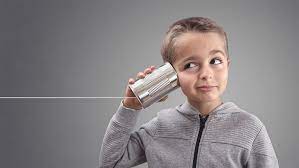
I hope you all have played that little childhood game (forget the Squid Game for a while folks!). I am talking of the game wherein we used to make a chain of friends and used to pass a message in the ear of one person to another until the message reaches the person last in line and he speaks out what he heard, and it actually turned out to be a hilarious statement when compared to the original message transmitted.
So, apt and clear, the third important message,
3. Communicate directly to the person/channel/forum it is meant for, do not divert it or add more channels or mid-men that would do no more than distorting it in a manner that suits them.
Friends, above is the most common mistake we make in our day to day communication, we generally do not communicate directly with the person whom it is meant for and tend to get it communicated through other sources that not only causes distrust in a relationship but also creates what we call “COMMUNICATION GAP”. How hard the matter might seem to communicate directly, it cannot be harder than patching up the broken pieces of a glass. So choose direct communication no matter what it is about or how it may affect your relation with the other person. It would definitely get better! Mark my words!
While we resort to verbal communication, we should try and communicate in a language well understood or perceived by the listener to have a larger impact of what we wish to communicate. Here I would like to share a small example of how language creates a major impact in communication. I was looking after a profile wherein truck drivers were to be given training on road safety. They were well versed with Hindi and Punjabi languages both, so I had videos both in Hindi and in Punjabi, while I myself used Punjabi as I also felt better connected with them as a faculty while I spoke the language they better perceived (though I am more comfortable speaking Hindi). After the sessions there was a questionnaire for them to be attempted. Out of more than 50 drivers, only 2-3 attempted questions out of those shown in the Hindi Video, rest all attempted only those which were related to the Punjabi video though all of them were Hindi versed too. Down comes the 4th lesson.
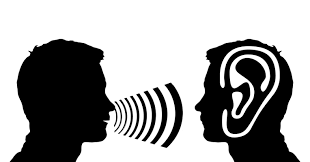
4. Choose the language your listeners can better connect to and not necessarily what you are better at (unless and until you do not know that language)
While you choose the language, also be considerate about the terms you refer in your conversation. All listeners or readers may not carry the same intellect. So when it comes to a varied audience, avoid using technical terms or business jargons or any other words or phrases to flaunt your knowledge of language or subject. Mind it, it would entirely depend on the genre of your listeners/readers. Talk what the listeners can intercept and not what they would need to decode.
Sometimes it so happens that, what we say is what we do not mean. Or to simplify I would just say, out of anger or out of excitement or out of stress, we say something that we apologise for, afterwards saying “I did not mean it!” It happens often with most of us. Right?
In such a situation, not only do we harm relations, hurt people or damage our own credibility but also get burdened of a guilty conscience that surrounds us for long as they say “ Words once said, can’t be taken back”
Our thoughts, our words and our actions need to work synchronously to earn trust and credibility in relationships. That goes for both professional and personal relationships. Simply, why at all say words that we don’t mean. If you think it over, it absolutely makes no sense! Channelize your energy elsewhere instead of blurting out words that you do not mean!
There we get to the 5th lesson:
5. Hear yourself say what you are saying but before saying do pause and decide what it implies or means
I remember the day, when I was assigned the job of making a presentation that was meant to be presented in front of one of the topmost govt. delegates. I put my heart into it and then sent it to the in-charge. He looked at it once, then twice and then paused for a few seconds. He told me, your potential is too high for this presentation and that’s why I think I am expecting something more as I have seen even better presentations from you. He just didn’t negate my efforts saying, “This is not what I expected from you!” (While it meant the same). I got motivated enough to work up all night and improvise the entire thing into one such presentation that I am still remembered for. That’s the power of the chosen words.
Friends, Euphemism does not mean you cannot keep an honest opinion, but it does mean that the manner you choose must help the listener take something productive from the conversation instead of going back demoralized or distressed.
We are generally taught in GD Skills, not to use the words “You are wrong” but to use” I beg to differ, In my opinion etc.” We are also taught to moderate our tone from a confident high to a humble low.
Similarly, we have shifted to addressing handicapped people not as physically disabled but as differently abled.
That absolutely takes us to the 6th lesson
6. Choice of words and the tone of voice is very important in communication whether verbal or written. Choose your words wisely before you utter them, we have enough time to speak or write. Pause, breathe, and then say. Even negation can be done in a positive manner that doesn’t at all feel like negation.
So, I have reached writing it this long, but what’s the deal if half of you left it unread halfway, the other few thinking, we already know this stuff, and very other few negating the entire concept talked about! My communication will be complete only when I get sure that you all read it till the end. So, I have a quest for you, if you have reached reading till here, just mention the number of times I have mentioned the word Communication in this entire blogpost, in the comment section below! Let’s make it fun friends!
Though I’ll go through the comments a little later, I just want to communicate the final lesson of communication:
7. A communication without listening is incomplete.
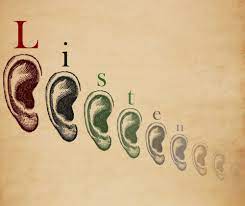
A speaker or a writer is incomplete in his/her communication without having been heard or read. If I have no listener, I am no speaker. If I have no reader, I am no writer. We just need to make sure that we choose the manner of verbal and non-verbal communication such that it imprints into to the minds and hearts of our listeners/ readers, and they can replicate the communication exactly as we wanted them to perceive it. Ensure taking feedback at the end of any communication to ensure “What I said is exactly What you heard”. Whether or not the listeners or readers understood what you intended to say.
Generally, people would hear to reply and prove their point better and read to comment or compliment, only few of us listen to understand or read to introspect. People would love to hear what they expect to, rest they won’t hear at all! Though sometimes it is also actually good not to hear some words, but that is a separate topic of discussion. For now, we just need to understand that for being a good speaker, we need to be a good listener first. That’s what we have two ears and one mouth for. On the top we have our brain, then years and then the mouth evident enough of which to use first and thereafter!
So, channelize the avalanche of your thoughts into optimized words and appealing actions so as to be heard and achieve a complete fruitful communication.
To be heard, you need to say what you mean and with conviction, and to be read, you need to write less from the pen and more from the heart and do add some quests in the prose to prove it!
Let’s see how many of you get through, rather let’s see, how many of you I could take through!
Thanks for your patience and time!
Signing Off…
 From Shruti's Pen
Very well communicated though i missed the non verbal communication. Wish it was a vlog😊, it would have been the cherry on top..
LikeLiked by 1 person
👍
LikeLiked by 1 person
Awesome. Proud of you
LikeLiked by 1 person